4 Small MTB Backpacks Tested: Which Hydration Pack Wins?
Jennifer Miller ·
Listen to this article~6 min
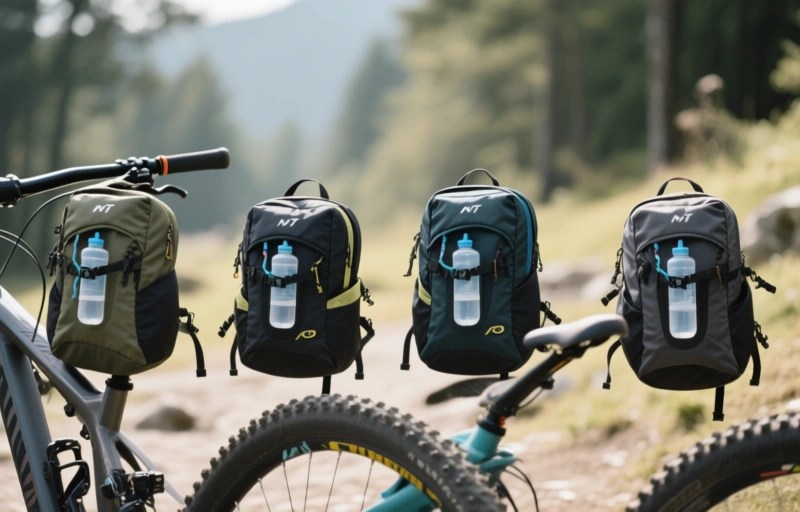
We tested four small MTB backpacks to find the best hydration pack for trail rides. Compare the CAMELBAK Chase Race 4, Deuter Rogla 5, EVOC HYDRO PRO 3, and Rhythmus RP 9L to find your perfect fit.
As little as possible, as much as necessary: small MTB backpacks carry exactly what a trail ride demands, from a hydration bladder to a repair kit. We tested four compact models to find out which one suits which rider type best.
Shut your laptop, put on a helmet, and head straight from the office to the trail. That's what after-work rides look like for many of us. You don't need much gear, but water, a pump, a multitool, and a snack are must-haves. Small MTB backpacks and hydration packs promise to strike that perfect balance of compact size and enough storage for the essentials. But which model is best organized, which one includes a hydration bladder, and are 3 liters enough for a quick ride or do you need closer to 9 liters? We compared four backpacks that we regularly use for our work outings.
### Which MTB Backpack Is Right for You?
For this comparison, we picked four small MTB backpacks that we use regularly. The models differ significantly, ranging from minimalist 3-liter packs with hydration bladders to a 9-liter model with more storage for longer day trips. The key factors for us were comfort, compartment layout, storage space, hydration system, and real-world trail performance.
Here's a quick look at the contenders:
- **CAMELBAK Chase Race 4** - 3 liters, $135 (includes 1.5-liter bladder)
- **Deuter Rogla 5** - 5 liters, $110 (bladder not included, holds up to 2 liters)
- **EVOC HYDRO PRO 3** - 3 liters, $150 (includes 1.5-liter bladder)
- **Rhythmus RP 9L** - 9 liters, $160 (bladder not included, holds up to 2 liters)
### What's the Difference Between a Vest System and a Classic Backpack?
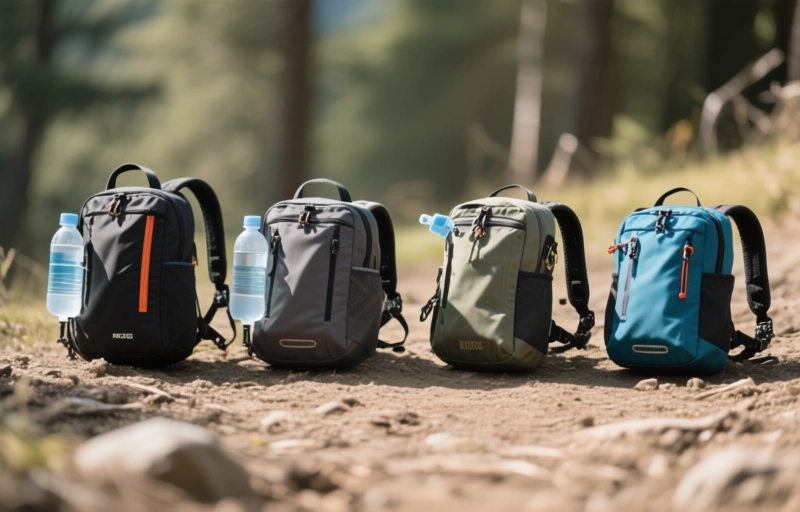
Vest systems fit snugly around your upper body like a vest and distribute weight more across your chest. This gives you a very stable fit, especially on rougher trails. Classic backpacks sit more against your back and often offer more storage and structure, though not all of them sit as close as you might hope. It's no coincidence that most of the models in this test use vest systems. For small, performance-focused MTB backpacks, this concept makes more sense to us and to many of you. Only the bigger Rhythmus backpack offers additional adjustability via shoulder straps, similar to what you'd expect from a traditional backpack. But which concept works best on the trail, and which backpack delivers the most convincing overall package?
### The CAMELBAK Chase Race 4: The Minimalist
The CAMELBAK Chase Race 4 is a trail backpack clearly focused on the essentials. With its compact cut, 3-liter capacity, and a 1.5-liter hydration bladder included, it's aimed at riders who only want to carry water, tools, snacks, and a few small items on short rides. It's not designed for bigger loads, especially when the bladder is full.
Straight out of the box, the backpack leaves a high-quality impression. The material is robust and doesn't soak up water in wet conditions. On your back, the Chase Race 4 feels airy and soft, more like a snug vest than a classic backpack. This delivers excellent comfort, especially if you want to feel as little weight as possible on the trail. Its relatively low weight also underlines its minimalist character.
The small CAMELBAK is well organized internally. A multitool, valve, or snack bar sits neatly in place without the contents descending into the usual trail-pack chaos. The chest pockets offer genuinely quick access to a phone without breaking stride. The chest straps are broad, easy to clip, and adjustable enough to dial in a secure fit.
The downside of the minimalist concept is the very limited storage space. As soon as you want to carry a jacket or additional gear alongside the basics, space becomes tight. Longer pumps in particular can bump into the top of the compartment. There are also long adjustment straps under the arms. While they allow the pack to fit a wide range of body types, they can sometimes get in the way.
### The Deuter Rogla 5: The Balanced All-Rounder
The Deuter Rogla 5 offers 5 liters of volume, making it a middle-ground option. It's still compact but has enough room for a light jacket or extra snacks. The vest-style fit is comfortable, and the mesh back panel helps with airflow on hot days. However, the hydration bladder is not included, which adds to the overall cost if you need one.
### The EVOC HYDRO PRO 3: The Premium Performer
The EVOC HYDRO PRO 3 is another 3-liter pack, but it feels more premium. The material is durable, and the vest fit is incredibly secure, even on aggressive descents. The included 1.5-liter bladder is easy to fill and clean. Storage is tight, but the pockets are well-designed for quick access to essentials.
### The Rhythmus RP 9L: The Day-Trip Companion
The Rhythmus RP 9L is the largest pack in this test, offering 9 liters of capacity. It's more of a traditional backpack with adjustable shoulder straps, making it ideal for longer rides where you need to carry more gear. It doesn't include a bladder, but it can hold up to 2 liters. The extra space is great for a spare tube, pump, snacks, and even a lightweight jacket.
### Final Thoughts
Choosing the right small MTB backpack depends on your riding style and needs. If you're all about minimalism and short rides, the CAMELBAK Chase Race 4 or EVOC HYDRO PRO 3 are excellent choices. For a balanced option with a bit more space, the Deuter Rogla 5 is a solid pick. And if you need to carry more for longer adventures, the Rhythmus RP 9L has you covered. No matter which you choose, a good hydration pack keeps you focused on the trail, not on your gear.