Canfield Tilt Review: Adjustable Aluminum Trail Bike
James Moore ·
Listen to this article~6 min
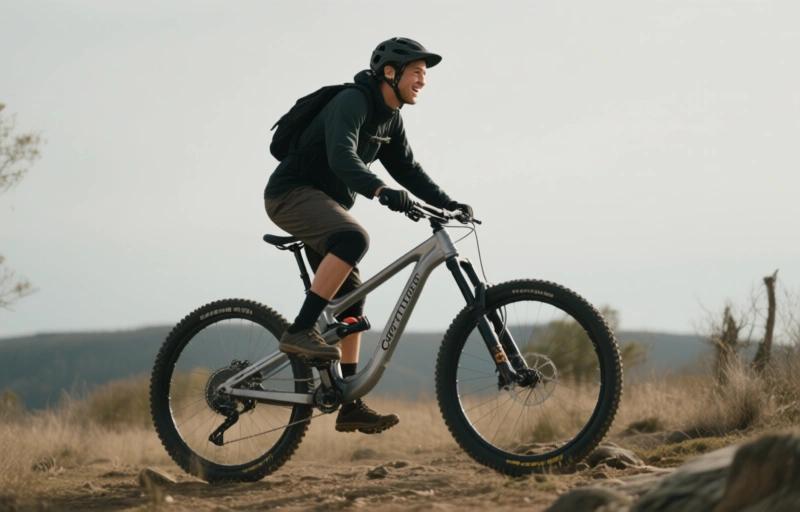
The Canfield Tilt is a heavy metal bike with modern geometry, adjustable chainstays, and CBF suspension. It's a versatile trail bike that pedals efficiently and descends confidently.
The Canfield Tilt is a heavy metal bike, both literally and figuratively. But don't let that fool you. The third-generation Tilt is every bit as modern and capable as any trail bike, and it's got a few tricks up its sleeve that will have buyers taking a serious look at the Colorado-based brand, perhaps for the first time.
### Key Specs at a Glance
- Travel: 5.5 inches front / 5.6 inches rear as tested. Compatible with forks from 5.1 to 5.9 inches. Rear suspension from 5.0 to 5.6 inches, depending on shock stroke.
- 29-inch or mixed wheel options
- Adjustable chainstay length: 16.8 inches or 17.1 inches (27.5-inch rear wheel) and 17.1 inches or 17.4 inches (29-inch rear wheel)
- 65-degree head tube angle, 77.2-degree effective seat tube angle at 5.5/5.5 inches travel
- Price: $2,499.99 for a frame, builds start at $3,999.99
- Buy from Canfield Bikes
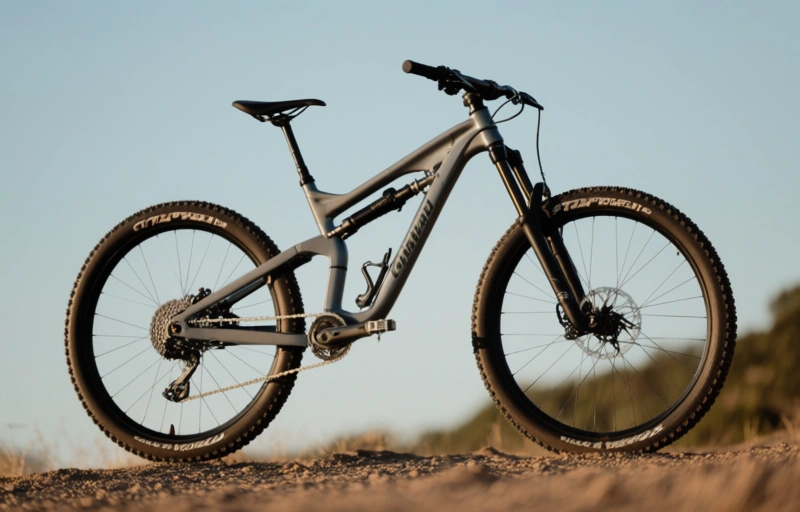
### New UDH Dropouts Offer Smart Wheel Size and Chainstay Length Adjustment
The updated Canfield Tilt features the brand's unique adjustable dropout system. The UDH-compatible design not only shifts up or down for 29-inch and 27.5-inch rear wheels, respectively, but it also gives riders two different chainstay lengths to choose from. It's a surprisingly modern, modular solution for an aluminum-frame bike.
Shifting the dropouts up or down ensures that the bike's head tube angle, seat tube angle, stack height, and bottom bracket height remain the same, whether you're running matched 29-inch wheels or mixed wheel sizes.
With 29-inch wheels, the Canfield Tilt offers either a 17.4-inch or 17.1-inch chainstay length. A shorter chainstay length generally gives a bike a more playful character, while a longer chainstay is associated with improved stability on descents. With mixed wheels, the Tilt switches between 16.8-inch and 17.1-inch chainstay lengths.
Though a 17.1-inch chainstay length is incredibly common among trail bikes, it's a big departure from the second-generation Tilt, which had short, 16.7-inch chainstays. Short chainstays had been a bit of a calling card for Canfield bikes, and in my test of the Canfield Yelli Screamy hardtail last year, I noted how agile the bike felt thanks to the short rear end. At the same time, the pedal feel was a little draggy, and I kept bumping the rear derailleur with my heel. Today's mountain bikes are seeing longer chainstays, and based on my tests, I think going longer on the Tilt was the right move.
### CBF Suspension Paired with a Robust Aluminum Alloy Frame
I decided to test the Canfield Tilt largely based on my incredibly positive experience with another CBF suspension bike, the Revel Rascal. CBF (Canfield Balance Formula) is a patented suspension design that's said to provide "optimum anti-squat throughout the entire range of travel, resulting in the most efficient pedaling possible, regardless of factors like sag, and without sacrificing bump compliance or traction, and with no unwanted pedal feedback from braking or drivetrain forces."
The Tilt is coil-shock compatible, and my test bike was set up with a hybrid air/coil Cane Creek Tigon shock. Depending on your shock stroke length, the Canfield Tilt offers 5.0, 5.3, or 5.6 inches of rear suspension travel.
Unlike Revel, which mostly sells carbon bikes, Canfield CBF bikes are 100% metal. The Tilt frame features extensive bracing for an incredibly stiff platform. The linkage design is similarly robust and flex-free. And the bottom bracket area is particularly beefy thanks to its forged clamshell construction.
At one point during my testing, I noticed a strange clunk whenever I pedaled. Thinking the frame might be flexing under the uneven load, I mounted a camera in various locations on the bike to see what was happening. Watching the videos, I couldn't see any side-to-side flex; not even a little bit. Lance Canfield ultimately helped me determine that it was an incorrectly seated bottom bracket bearing that was causing the chainring to sit too close to the drivetrain.
### How It Rides: Playful Yet Stable
On the trail, the Tilt feels like a bike that can do it all. The adjustable chainstays let you dial in the ride feel. Set to the shorter setting, the bike feels lively and easy to pop off roots and rocks. In the longer setting, it tracks straight through chunky sections and feels planted at speed.
The CBF suspension is the real star here. It pedals efficiently without any noticeable bob, even when climbing steep pitches. And when the trail points downhill, the suspension opens up and absorbs hits like a bike with more travel. It's a smooth, predictable ride that inspires confidence.
One thing to note: the Tilt is not a lightweight bike. At around 33 pounds for a complete build, it's on the heavier side for a trail bike. But that weight translates to durability. This is a bike you can abuse and trust to hold up.
### Final Thoughts
The Canfield Tilt is a versatile, well-engineered trail bike that stands out for its adjustability and suspension performance. It's not the lightest bike out there, but it's built to last and ride hard. If you're in the market for an aluminum trail bike that can adapt to your riding style, the Tilt deserves a serious look.